Supervised Child Visits

The right choice for family visitations and monitor training
  • Home
  • About Us
    • Tamara L. Daniels
  • Monitor Training Classes
  • Register
  • Resources
    • 2025 California Rules of Court 5.20
    • Parent Guidelines
  • Fee Schedule
  • Contact
  • Media
You are here: Home / Archives for Tamara Daniels

June 30, 2015 by Tamara Daniels

Behaviors of Batterers That May Impact Visitation

Behaviors of Batterers That May Impact Visitation

If, after conducting an intake, the Provider accepts a referral for visitation in a domestic violence case, it is important to identify behaviors that may subsequently impact visitation. It is critical to keep in mind that the goal of providing supervised visitation services, including Provider exchanges, is to provide a safe, neutral setting for parent-child access. If this cannot be accomplished, the visitation provider or program must not accept the referral.

The following are behaviors sometimes used by batters that may affect a program’s ability to provide safe visitation:

  • Threats of violence toward the victim. This may include verbal abuse as well as attempted or actual physical assault
  • Threats of violence toward children. This may include verbal abuse, threats, attempted or actual physical abuse, kidnapping
  • Using visitation to send messages to the victim through the children
  • Stalking the victim and children upon arriving or departing from visitation program. This can be done in person or through a third party family member or friend
  • Intimidating children to reveal their current living arrangement, their custodial parent’s activities, their phone numbers
  • Testing or violating staff or volunteers
  • Intimidating visitation staff or volunteers
  • Pitting one staff member against another to encourage divisiveness
  • Requesting “special” privileges, such as unsupervised time with children
  • Denial or minimization of abusive behavior (“It’s all a misunderstanding.”)
  • Blaming other parent for necessity of having to use visitation services
  • Attempting to bring weapons (guns, knives, etc.) into program
  • Threats or attempts to commit suicide

Remember, safety belongs first to the visitation provider (monitor). If the provider is not safe, he or she cannot keep the child(ren) safe. When considering whether or not to accept a visitation referral, remember this quote, “All money is not safe money.” –Tamara L. Daniels
Share this:

  • Click to share on Facebook (Opens in new window)
  • Click to share on LinkedIn (Opens in new window)
  • Click to share on Twitter (Opens in new window)
  • Click to email a link to a friend (Opens in new window)

Filed Under: News

June 30, 2015 by Tamara Daniels

Understanding the Victim of Domestic Violence

Understanding the Victim of Domestic Violence

It is important for visit Providers to have an understanding of common victim characteristics and behaviors in order to be able to effectively facilitate visits:

  • Domestic violence victims can be found in all age ranges, in all racial/ethnic backgrounds, and in all socioeconomic, educational, occupational, and religious groups.
  • Some, but not all, of domestic violence victims have been abused as children or in previous adult relationships.
  • As part of their abuse experience, many victims have become isolated from friends, families, or their normal activities because of their perpetrator’s controlling behavior.
  • Victims of domestic violence experience traumatic effects from their experience including:
  • denial or minimization of the abuse;
  • hyper vigilance/suspiciousness;
  • anxiety;
  • difficulty concentrating;
  • shame;
  • substance abuse to self-medicate;
  • low self-esteem;
  • numbing or depression;
  • anger; and
  • impaired functioning in occupational, social, and parental roles.

These emotional reactions are normal, but they may result in a visit Provider mistakenly assuming it is the victim’s fault – instead of the perpetrator’s fault – that visitation is ordered. Understanding that these victim reactions are common will prevent visit Providers from inaccurately assigning psycho- pathological labels to the victim, such as “she’s crazy,” “she’s hysterical,” etc.

Victims of domestic violence engage in a variety of strategies to escape abuse:

  • Legal methods such as obtaining injunctions, requesting orders for supervised visitation/Provider exchanges, calling law enforcement, proceeding with prosecution of perpetrator, or seeking separation or divorce.
  • Formal requests for help from social service agencies, religious, domestic violence shelters, or other groups, including supervised visitation programs.
  • Escaping to a domestic violence shelter or relocating.
  • Using various methods of self-defense.

Because of the perpetrator’s undermining of the victim and the resulting decreased parenting capacity, some mothers who are in domestic violence relationships are at risk of harming or neglecting their children. Research suggests that by keeping abused mothers safe, children’s safety can be increased.

Share this:

  • Click to share on Facebook (Opens in new window)
  • Click to share on LinkedIn (Opens in new window)
  • Click to share on Twitter (Opens in new window)
  • Click to email a link to a friend (Opens in new window)

Filed Under: News

June 16, 2015 by Tamara Daniels


“WOW Facts” of Domestic Violence


  • In a national survey of more than 6,000 families in the United States, half of the men who frequently assaulted their wives also frequently abused their children.


  • Long-term exposure to battering can result in delinquency, higher rates of substance abuse, propensity to use or tolerate violence in future relationships, and a pessimistic view of the world.


  • Short-term effects of children’s exposure to domestic violence can include post-traumatic stress disorder, sleep disturbances, separation anxiety, aggression, passivity, or desensitization to violent events.


  • Eighty-five percent of assaults on spouses or ex-spouses are committed by men against women with an estimated 3.3 million children exposed nationally to violence by family members against their mothers or caretakers each year.


  • At least 75% of children whose mothers are battered witness the violence.


  • In one study, forty-seven percent (47%) of homeless parents reported a history of domestic violence and one in four stated that a primary reason they sought shelter was domestic violence.


  • It is estimated that there are 1.35 million homeless children in the US; nearly half of these are under the age of 5.
  • Every 9 seconds in the US a woman is assaulted or beaten.
  • Around the world, at least one in every three women has been beaten, coerced into sex or otherwise abused during her lifetime. Most often, the abuser is a member of her own family.
  • Domestic violence is the leading cause of injury to women—more than car accidents, muggings, and rapes combined.
  • Studies suggest that up to 10 million children witness some form of domestic violence annually.
  • Nearly 1 in 5 teenage girls who have been in a relationship said a boyfriend threatened violence or self-harm if presented with a breakup.
  • Every day in the US, more than three women are murdered by their husbands or boyfriends.


  • Ninety-two percent (92%) of women surveyed listed reducing domestic violence and sexual assault as their top concern.
  • Domestic violence victims lose nearly 8 million days of paid work per year in the US alone—the equivalent of 32,000 full-time jobs.
  • Based on reports from 10 countries, between 55 percent and 95 percent of women who had been physically abused by their partners had never contacted non-governmental organizations, shelters, or the police for help.
  • The costs of intimate partner violence in the US alone exceed $5.8 billion per year: $4.1 billion are for direct medical and health care services, while productivity losses account for nearly $1.8 billion.
  • Men who as children witnessed their parents’ domestic violence were twice as likely to abuse their own wives than sons of nonviolent parents.
  • 63% of all boys who commit murder kill the man who was abusing their mother.


Developed by Violence Against Women Online.


Share this:

  • Click to share on Facebook (Opens in new window)
  • Click to share on LinkedIn (Opens in new window)
  • Click to share on Twitter (Opens in new window)
  • Click to email a link to a friend (Opens in new window)

https://supervisedchildvisits.com/1114/

Filed Under: News Tagged With: abuse, children, domestic violence, family law

June 12, 2015 by Tamara Daniels

7 Highly Effective Principles for Every Successful Business©


Business Principle #1: Go to the Top of Your Field With Straight F’s; Faith, Family, Friends, Fitness and Fun—Dave Brown. There is order in every successful business. Keep first things first and the main thing the main thing. Maintaining order opens the pathway to all levels of success.


Business Principle #2: You have not because you ask not.  Honor the power of asking. Ask for prosperity, growth, wisdom and expansion in your marketplace. Ask and it shall be given unto you.


Business Principle #3: If you have to think about it twice don’t do it once. Place value on inner warnings and caution signs during the process of business deals. They are there to protect, not reject.


Business Principle #4: Refuse to fear. Refuse to worry. Refuse to be discouraged. These side affects are deadly to business. When they appear immediately swallow the anecdote: faith, confidence and courage.


Business Principle #5: Grow professionally and personally and increase in knowledge and in wisdom. Learn all that you can. Teach what you know. Respect the benefits of ‘application’. The door to learning and understanding must never shut.


Business Principle #6: Bad agreements corrupt good business. Avoid entering into agreements for money sake alone. Not all agreements are good agreements. Investigate the character and test the motives of the person offering the opportunity. The health of your business may depend on it.


Business Principle #7: Whatever you do, do it all unto the Glory of God. In my humble belief, all good things come from above. Acknowledging the giver of good things is the one principle that will guarantee the success of your business.


Share this:

  • Click to share on Facebook (Opens in new window)
  • Click to share on LinkedIn (Opens in new window)
  • Click to share on Twitter (Opens in new window)
  • Click to email a link to a friend (Opens in new window)

Filed Under: News

May 16, 2015 by Tamara Daniels

Facts & Figures

In 2013, an estimated 1,163,146 violent crimes occurred nationwide, a decrease of 4.4 percent from the 2012 estimate.

• When considering 5- and 10-year trends, the 2013 estimated violent crime total was 12.3 percent below the 2009 level and 14.5 percent below the 2004 level.

• There were an estimated 367.9 violent crimes per 100,000 inhabitants in 2013, a rate that declined 5.1 percent when compared with the 2012 estimated rate.

…

* Aggravated assaults accounted for 62.3 percent of violent crimes reported to law enforcement in 2013. Robbery offenses accounted for 29.7 percent of violent crime offenses; rape (legacy definition) accounted for 6.9 percent; and murder accounted for 1.2 percent.

* Information collected regarding types of weapons used in violent crime showed that firearms were used in 69.0 percent of the nation’s murders, 40.0 percent of robberies, and 21.6 percent of aggravated assaults. (Weapons data are not collected for rape.)

U.S. Department of Justice—Federal Bureau of Investigation
Released Fall 2014

Share this:

  • Click to share on Facebook (Opens in new window)
  • Click to share on LinkedIn (Opens in new window)
  • Click to share on Twitter (Opens in new window)
  • Click to email a link to a friend (Opens in new window)

Filed Under: News

April 7, 2015 by Tamara Daniels

April Is National Child Abuse Month

One thing that many people do not know about abused children is that they often love the person who is hurting them. This is very hard to believe but it is true. This happens because the person who is abusing them is often someone they know well and trust a lot. Children are therefore hesitant to reveal that they are being abused because they fear that they will get the person into trouble if they do so. Another reason for children not wanting to disclose abuse is that many times they have been frightened or threatened by the abuser.

The children in your care love and trust you. A child who has been abused may start talking to you about it. He may do so because he trusts you and wants to share the burden he is carrying with you. Hearing a child talking about being abused is very difficult. You may react in different ways. Your reaction is very important to the child. If you react with disgust or don’t believe what he is saying, he may stop talking to you about it. He will feel that you don’t trust him. This will prevent him from getting help. It also prevents the abuse from stopping.

Be very sensitive and listen carefully when a child is talking to you about abuse. Keep in mind that it is very difficult for the child to talk about being abused. This is especially hard for children who have been sexually abused. The child has gathered up all her courage to tell you about the abuse. How you handle the conversation will determine how you will be able to help the child.

What Should I Do If I Suspect Child Abuse?

Answer

All States have a system to receive and respond to reports of suspected child abuse and neglect. If you suspect a child is being harmed, or has been harmed, you should report your concerns to the appropriate authorities, such as child protective services (CPS), in the State where the child resides. Each State has trained professionals who can evaluate the situation and determine whether help and services are needed. Most States have a toll-free number to call to report suspected child abuse and neglect. Child Welfare Information Gateway, a service of the Children’s Bureau, Administration for Children and Families (ACF), provides a list of  State child abuse and neglect reporting numbers and information on how to make a report in each State.

Can I Make An Anonymous Report of Abuse?

Answer

Many states accept anonymous reports of alleged child abuse and neglect. It is important to note, however, that all states are required to preserve the confidentiality of all child maltreatment reports, except in certain limited circumstances: see Disclosure of Confidential Records at: http://www.childwelfare.gov/systemwide/laws_policies/statutes/confide… Confidentiality refers to protecting the information from public view, including protecting the identity of the reporter from the person suspected of abuse or neglect.

Reporting suspected child abuse and neglect is everyone’s responsibility. If you have any concerns about the treatment of a child, you should contact the appropriate authorities in the state in which the child resides. Each state has trained professionals who can evaluate the situation and determine whether intervention and services are needed. Most states have a toll-free number to call to report suspected abuse. Child Welfare Information Gateway, a service of the Children’s Bureau, provides a related organization list of state child abuse reporting numbers:  https://www.childwelfare.gov/organizations/?CWIGFunctionsaction=rols:….

Share this:

  • Click to share on Facebook (Opens in new window)
  • Click to share on LinkedIn (Opens in new window)
  • Click to share on Twitter (Opens in new window)
  • Click to email a link to a friend (Opens in new window)

Filed Under: News

April 4, 2015 by Tamara Daniels

How Can You Tell/ Handle It When A Visitation Client Is Lying To You?

In your gut, you think the visitation parent may be lying to you. Your gut isn’t enough to go on, but you shouldn’t discount it either.

Here are simple guiding questions and principles to help address this issue:

a) Is there supporting or contradictory evidence to your suspicions?
b) Stay open and objective to the actual evidence or facts.
c) Determine if the lie matters (i.e. Was the lie about the parents late arrival or an emotionally harmful statement the parent made to the child?
d) Will the lie change potential visitation outcomes?
e) Will the lie have an impact on the child-parent relationship?
f) If the lie can be confirmed and has a negative impact on the visitation, consider implementing L13 of the Uniform Standards of Court 5.20 (allowing a Provider to set additional rules both parties must follow).

4/4/2015

*Post inspired by James Pitman, Ph.D

Share this:

  • Click to share on Facebook (Opens in new window)
  • Click to share on LinkedIn (Opens in new window)
  • Click to share on Twitter (Opens in new window)
  • Click to email a link to a friend (Opens in new window)

Filed Under: News

April 4, 2015 by Tamara Daniels

Child Pronography Facts

A study funded by Congress shows 99% of child pornography collections have images showing the sexual abuse of very young children. Less than 1% of child pornography collections limit themselves to nude or semi-nude photos, according to the study conducted in 2001:
• 83% contain images of children 6-12 years old,
• 39% had images of children 3-5 years old,
• 19% had images of children younger than 3.
The vast majority of child pornography collections show children being brutally sexually assaulted:
• 80% of collections seized had photos showing sexual penetration, and
• 21% of collections showed images of physical assault and torture.

To view Part I of this video click on the below link.
http://shiftwellness.org/resources/videos/introduction/

For more information about this video, please contact: Office of Juvenile Justice and Delinquency Prevention 810 Seventh Street NW. Washington, DC 20531 202–307–5911

4/4/2015

Share this:

  • Click to share on Facebook (Opens in new window)
  • Click to share on LinkedIn (Opens in new window)
  • Click to share on Twitter (Opens in new window)
  • Click to email a link to a friend (Opens in new window)

Filed Under: News

March 14, 2015 by Tamara Daniels

Do you Struggle With Anger? Want help? —–Watch this 1st

Share this:

  • Click to share on Facebook (Opens in new window)
  • Click to share on LinkedIn (Opens in new window)
  • Click to share on Twitter (Opens in new window)
  • Click to email a link to a friend (Opens in new window)

Filed Under: News

March 6, 2015 by Tamara Daniels

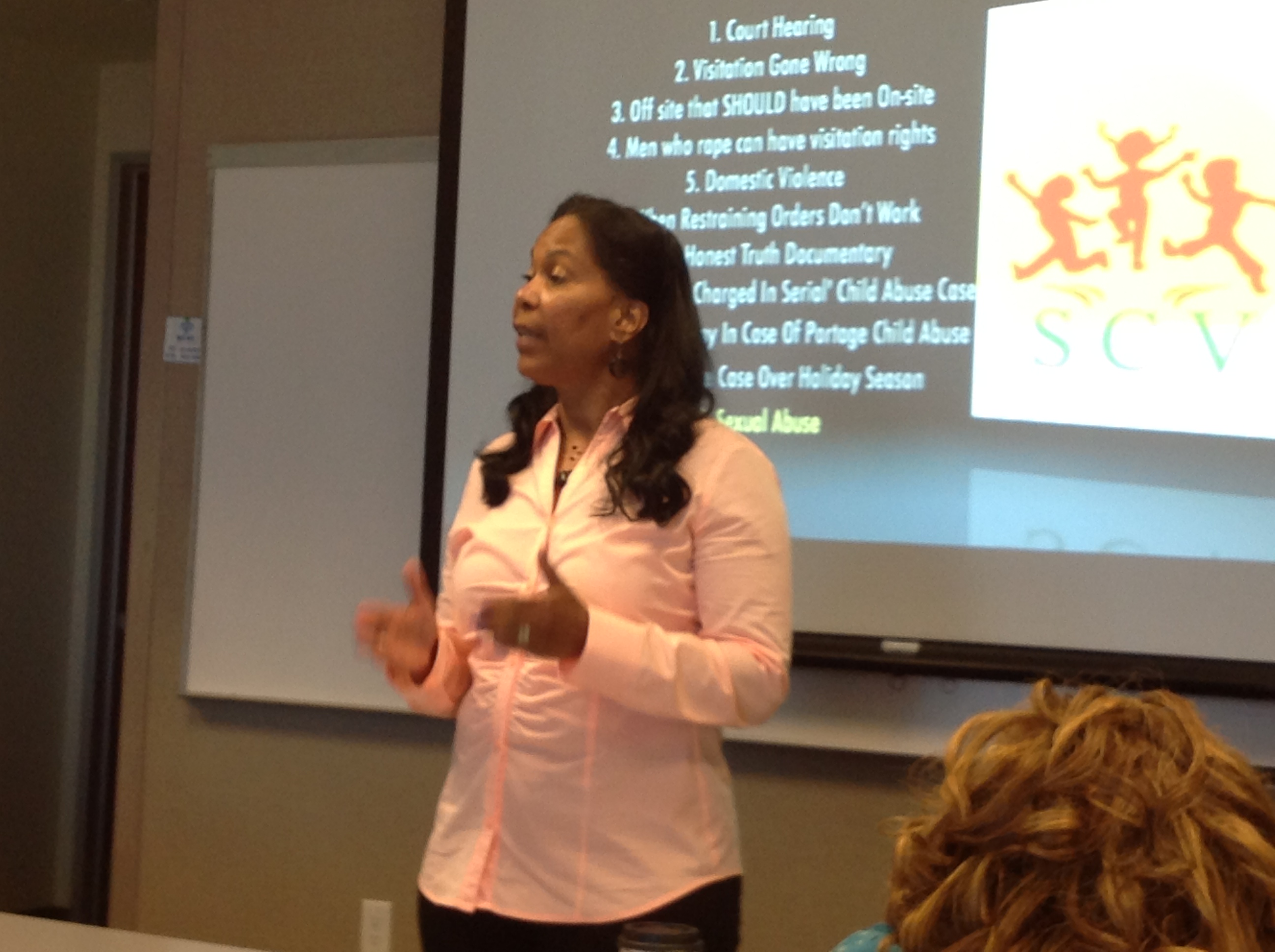
Supervised Child Visits (SCV) in action

Photo_Trainer in action-2

Training in action

Judges Night_SFVBA 2015 Gala.png

Judges Night 2015, Warner Center Marriott Hotel

Untitled-11

Share this:

  • Click to share on Facebook (Opens in new window)
  • Click to share on LinkedIn (Opens in new window)
  • Click to share on Twitter (Opens in new window)
  • Click to email a link to a friend (Opens in new window)

Filed Under: News

  • « Previous Page
  • 1
  • 2
  • 3
  • 4
  • 5
  • Next Page »

Recent Posts

  • ‘Situational Awareness’:Part I
  • Effective Parenting Quiz
  • November is Family Court Awareness Month
  • Establishing and Enforcing Visitation
  • Real-time GPS system to monitor sex offenders

Recent Posts

  • ‘Situational Awareness’:Part I
  • Effective Parenting Quiz
  • November is Family Court Awareness Month
  • Establishing and Enforcing Visitation
  • Real-time GPS system to monitor sex offenders

Company History

The public policy of the state of California is to protect the best interest of children whose parents have a custody or visitation matter in family court. Sometimes, based on issues of protection and safety, a judge will order that a child only have … Read more

Recent Posts

  • ‘Situational Awareness’:Part I
  • Effective Parenting Quiz
  • November is Family Court Awareness Month
  • Establishing and Enforcing Visitation
  • Real-time GPS system to monitor sex offenders

Follow Us!

Follow Us on FacebookFollow Us on TwitterFollow Us on LinkedInFollow Us on YouTube
Copyright © 2026 Supervised Child Visits - Growth Motivator Enterprises, Inc. | Developed by One Website Please | Privacy Policy & Disclaimer